Home News and events People are no longer travelling to eat. They are travelling to learn how
Opportunity
People are no longer travelling to eat. They are travelling to learn how
Asia Pacific is forecast as the fastest growing culinary tourism market in the world, and the growth is in participation rather than reservations.
Cooking classes, market walks, culinary trails and food festivals are pulling a growing share of travel spend, and the region's advantage is the thing it already has.
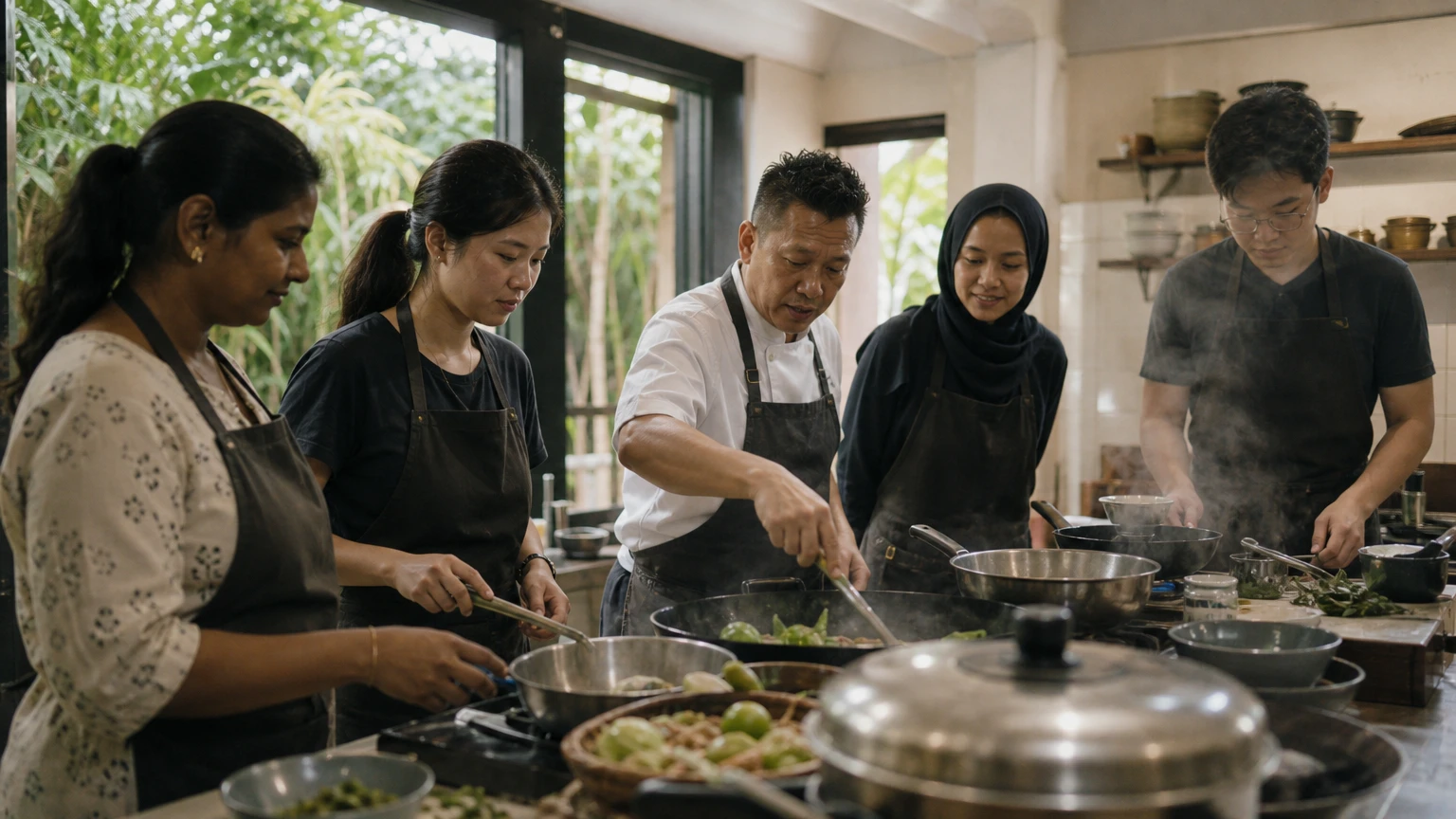
Grand View Research forecasts the Asia Pacific culinary tourism market growing at 23.4% annually to 2033, the fastest of any region. The composition of that growth is the interesting part. It is not restaurant reservations. It is cooking classes in Bangkok, street food walks in Penang, tea ceremonies in Kyoto, market tours and culinary trails: formats where the traveller participates rather than consumes.
Industry trackers report experiential dining participation rising by roughly a third year on year, and food and beverage tour bookings up around a quarter. Food festivals hold the largest single share of activity revenue.
This matters for anyone in Southeast Asia thinking about starting something, because the barrier to entry in this category is unusually low and the barrier to doing it well is unusually high. A cooking class needs a kitchen, a story and a licence. It does not need a hotel. What it does need is somebody who can cost a session properly, fill it outside peak weeks, and hold the quality when the guide is somebody other than the founder.
That last point is where most experience businesses in the region stall. The founder is the product. Revenue grows until the founder runs out of Saturdays, and then it stops. Turning a personal skill into a business that runs without you is a design problem: documented service, trained delivery, a cost base that survives a second guide, and a channel mix that is not entirely one platform.
The market is growing quickly. The scarce skill is planning an experience business that still works at three times the volume.
Sources
- Grand View Research, culinary tourism market report
- Business Research Insights, culinary tourism market
- The Business Research Company, culinary tourism global market report
Figures are quoted from the organisations named above and were current at the time of writing. Cairnhill Institute is not the source of this data and does not present it as a forecast of any individual outcome.