Batch 01, part-time runs 1 August 2026 to 28 February 2027. Dates for the next intake are confirming.

Home The programme

Advanced Diploma

Hospitality, Tourism and Entrepreneurship Management

Seven modules, an assessed overseas immersion, and a plan of your own at the end. Part-time, over seven months.

Entry requirements
Duration
Seven months, part-time
Taught in
Blended: face to face and online
Class size
1 teacher to 18 students

The shape of the seven months

Month by month.

One module a month, in a deliberate order. Months 2 to 4 run on campus and include the overseas immersion, on a fixed calendar.

Month 1 is online. Months 2, 3 and 4 are on campus, with the assessed overseas immersion anchored to months 3 and 4. Months 5, 6 and 7 return to live online.

  1. 01 Management of Tourism Destinations Live online
  2. 02 Entrepreneurship in the Tourism and Hospitality Sector On campus
  3. 03 Management of Cultural Tourism Immersion On campus and overseas
  4. 04 Service Innovation and Experience Management Immersion On campus and overseas
  5. 05 Hospitality Marketing and Digital Channels Live online
  6. 06 Hospitality Performance and Financial Management Live online
  7. 07 Applied Research Capstone Live online

Live online, scheduled sessions On campus at 36 Newton Road Assessed overseas immersion, anchored to Modules 3 and 4

How it runs

Delivery, assessment and graduation.

Delivery, assessment and graduation
Mode of delivery60% live online and 40% on campus
Language of instructionEnglish
AssessmentWritten assessment and practical assessment
Graduation requirementsA pass in all seven modules. Minimum 75% attendance for each module.
Industrial attachmentNot applicable
Qualification awardedAdvanced Diploma in Hospitality, Tourism and Entrepreneurship Management, awarded by Cairnhill Institute Pte. Ltd.

There is no industrial attachmentThe programme does not include a placement into a hotel or an operator. It builds toward a business plan of your own instead.

The curriculum

Seven modules, in a deliberate order.

What you examine
Why one destination fills and the one next to it does not: access, positioning, seasonality and marketing funding.
What you produce
A destination analysis you can defend.
Why it matters
Every hospitality business depends on the demand of the destination around it.
Assessment
Assessment details confirming
What you examine
What it costs to open the doors, what it costs to keep them open, and the gap between the two.
What you produce
A start-up plan with a cost base and a break-even point.
Why it matters
A concept only works if it covers its costs in an ordinary week, and this module teaches you to test that.
Assessment
Assessment details confirming
What you examine
How a place sells its own culture without wearing it out, and who in the community sees the money.
What you produce
Field observation carried out on the overseas immersion, written up as the graded immersion report and assessed back in Singapore.
Why it matters
Cultural tourism is one of the region's strongest assets, and managing it well is a commercial skill.
Assessment
Assessment details confirming
What you examine
Where a service breaks under load, and which parts of it depend on design.
What you produce
A service concept or improvement plan, plus the graded immersion report on live service environments observed overseas.
Why it matters
A service concept has to hold on a full night with a short-handed team.
Assessment
Assessment details confirming
What you examine
Commission, acquisition cost, and how much of each channel's demand the business keeps.
What you produce
A marketing plan with a channel mix you can justify line by line.
Why it matters
Channel costs decide how much of a full house the business actually keeps.
Assessment
Assessment details confirming
What you examine
The statements a manager is handed, and the operational decisions hiding inside each line.
What you produce
A financial plan for your own concept, with the break-even shown.
Why it matters
Financial fluency is what management roles are hired on.
Assessment
Assessment details confirming
What you examine
One problem you choose, investigated with your own primary research.
What you produce
A completed piece of applied research, presented and defended at capstone.
Why it matters
The capstone brings the six earlier modules together in one assessed piece of work.
Assessment
Assessment details confirming

Who teaches this

Four trainers, 18 seats.

Between them the teaching team brings Swiss hospitality management training, fifteen years of international work in luxury retail and service innovation, frontline service leadership in the public sector, and two decades of classroom practice. Classes are taught directly by the module lead in an 18-seat room.

What they did before teaching Swiss hospitality management training and fifteen years of academic governance and adult training across the Asia Pacific. Fifteen years of international work in luxury retail, digital transformation and service innovation. Frontline service leadership across the State Courts and government agencies. Two decades of classroom practice across Singapore and South Korea.

Trainer names, qualifications, conferring institutions and module deployment are published in full on the teaching page, as required under the Private Education Regulations.

Overseas Immersion Learning Journey

An assessed overseas immersion.

Anchored to Modules 3 and 4, inside the months 2 to 4 contact hours. You'll travel with your cohort and come back with a graded report, assessed in Singapore.

If you cannot travel

Two routes are documented. Defer to the next scheduled run, or, where the Academic and Examination Board approves it, complete an equivalent supervised local alternative against the same learning outcomes. Course completion is not affected either way.

What is still confirming

Destination, dates, and the travel and accommodation arrangement. Each will be published once the agreement is executed, and admissions can tell you the current position.

Entry requirements

Three entry routes.

For graduates of hospitality, tourism, business, culinary arts and related fields, and for people coming from another industry. The academic routes don't ask for work experience.

Minimum entry requirements

Minimum age 18

A diploma in a related field
A diploma in hospitality, tourism, business, events, food and beverage, travel services or a related field
No work experience required.
A polytechnic diploma, any field
A polytechnic diploma, or an equivalent qualification
Any field. No work experience required.
Experience instead of a diploma
Eight years or more of relevant work experience in hospitality, tourism, events, food and beverage operations or a frontline service role, subject to approval by the Academic Board
No diploma needed; this route is assessed on your work experience.

English language ability

Any one of the three

Test score
IELTS 5.5 or an equivalent score
Prior study
Prior studies conducted in English
Our own test
A pass in Cairnhill's internal English proficiency test at the required benchmark

The programme is taught and assessed in English. Meeting the minimum requirements does not by itself secure a place.

Dates

Current and next batch dates.

Course commencement
BatchStart dateEnd date
Batch 01, part-time1 August 202628 February 2027
Next batchConfirmingConfirming

Course fees

Every fee is on its own page, including what the programme fee covers and when anything is paid.

Where to find them The full fee breakdown, the payment protections and the application fee status sit on the fees page.

Where you land

Where the programme takes you.

A student working through a plan at a table with others.

The explorer

Fresh from a diploma

Your diploma is finished, or nearly, and you have no work experience yet. The academic entry routes do not require any.

Where you land
Direct contact with the industry, and a business plan of your own.
A duty manager at a desk late in the evening.

The contributor

Experienced on the floor

Front office, events, kitchen, tours or F&B: you can already run a shift. The programme adds the commercial skills for the next role.

Where you land
The pricing, marketing and financial skills used in management, evidenced by your own coursework.
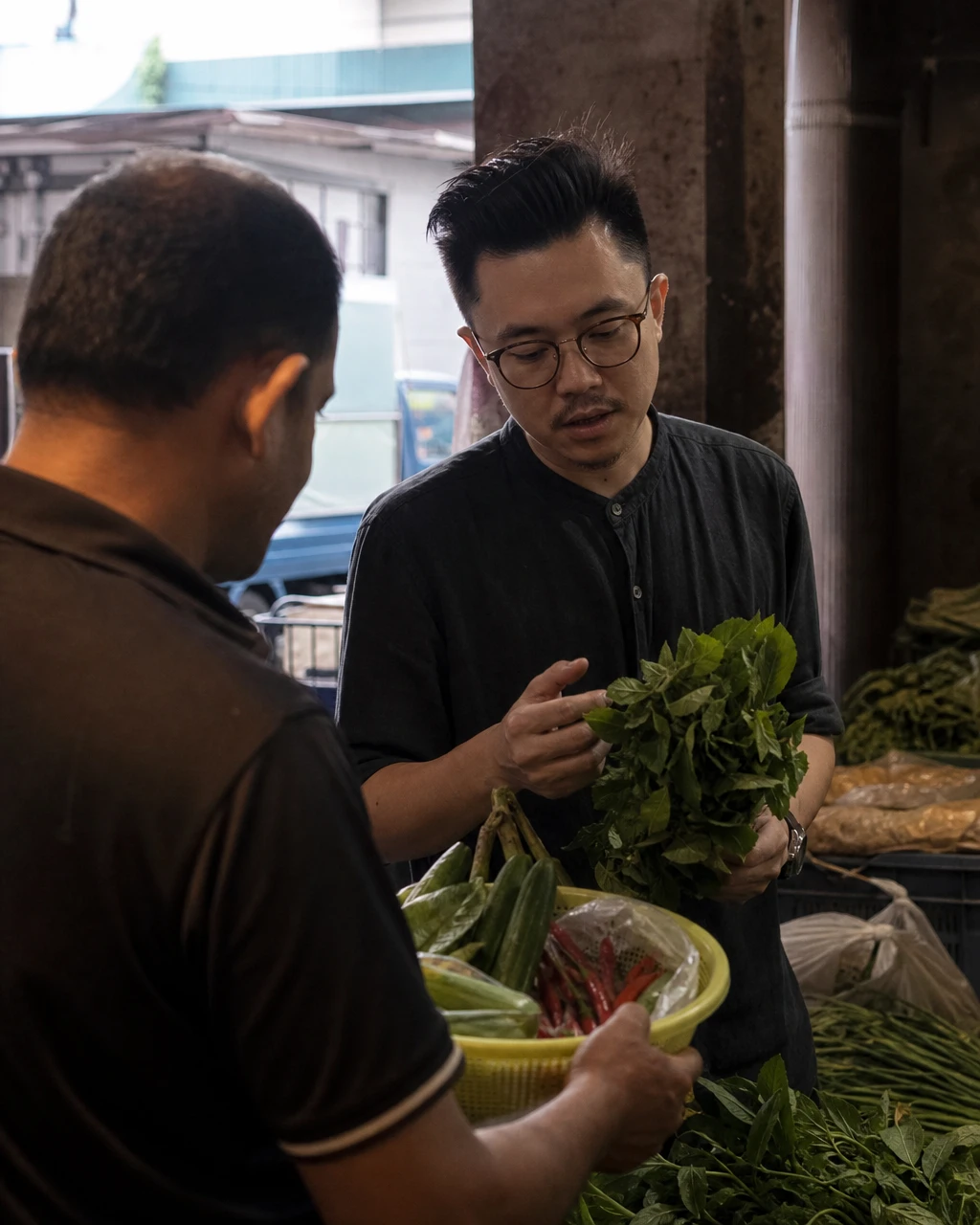
An owner selecting produce from a supplier early in the morning.

The builder

Already running a business

You run something small that works. The programme tests whether it can work at a larger size.

Where you land
A costed, defensible plan for growing your own business.

Admissions

Five steps to enrol.

Nothing is paid until you have received and signed the standard PEI-Student Contract.

  1. 01You request the course sheet. Schedule, fee and requirements, as soon as each is confirmed.
  2. 02A conversation, at the campus or online, about the schedule, the immersion and your circumstances.
  3. 03You apply, with your documents, or through the mature route.
  4. 04You receive the standard PEI-Student Contract and the full fee schedule.
  5. 05Fees are collected under the Fee Protection Scheme. The intake begins.
Speak with admissions

FAQ

Common questions.

No. Two of the three entry routes are academic and neither asks for any work experience: a diploma in a related field, or a polytechnic diploma in any field.

The third route is the reverse case: no diploma, but at least eight years of relevant experience, subject to Academic Board approval. You need one of the three, plus the English requirement.

It's part-time: four sessions a week, four hours a session. Months 1, 5, 6 and 7 run online. Months 2, 3 and 4 run on campus. The online months are built around live trainer-led sessions you are expected to attend, with guided self-paced work and supervised project time around them. The dated timetable is confirming.

It's assessed and anchored to Modules 3 and 4, and it sits inside the months 2 to 4 contact hours. You write it up as a graded immersion report, which is assessed back in Singapore.

If you cannot travel on a scheduled run, there are two documented routes: defer to the next scheduled run, or, in exceptional circumstances approved by the Academic and Examination Board, complete an equivalent supervised local alternative that meets the same learning outcomes. Neither affects course completion. Destination, dates and the travel and accommodation arrangement are confirming.

The full breakdown is on the fees page. In short: an academic programme fee across the seven modules plus a programme fee covering administration, student support, learning resources, industry exposure, enrichment and graduation. You receive the standard PEI-Student Contract and the full fee schedule before any payment, and fees are collected under the Fee Protection Scheme.

Not automatically. This is not registered as a pathway programme, and it carries no external accreditation, so nobody here can promise you a place anywhere else. Admission to a further qualification is decided by the receiving institution against its own criteria. If a formal articulation agreement is signed, it will appear on this site with the receiving institution named and the supporting documents lodged with CPE.

No. Cairnhill Institute Pte. Ltd. leases teaching premises at the property and delivers the programme itself. The hotel is the address of the campus, not a partner, an operator or an endorsement.

Anyone who cannot commit to four sessions a week for seven months, because the timetable is fixed.

The programme also includes no industrial attachment, and it is not a culinary or pure operations qualification; the focus is commercial. The assessed work across the modules builds a business plan, so it suits people who want to produce one.

Start with the course sheet.

Modules, dates, entry requirements and the full fee schedule, in one document.

Speak with admissions